


So... interest rates have been messing with the bond market, and the economy hasn't been doing as hot as we'd like. This has people thinking the Federal Reserve (Fed) might be almost done tightening (raising rates). In this post, we'll look at what's going on in the markets and how it could change what to expect in the coming months.
There have been some surprises in the bond market. The return on the two-year Treasury note dropped from over 5% in early March to under 4% by the end of the month. Even with this change, the Fed says rates have to go up to keep inflation under control.
When it comes to monetary policy, inflation in the services sector is going to play a big part in decisions over the next few months. A strong job market and rising wages have led to higher prices in many areas of the economy.
The job market news in March showed fewer new jobs than at any time since December 2020. On top of that, wage growth has slowed down, which might make the Fed less worried about inflation caused by wages.
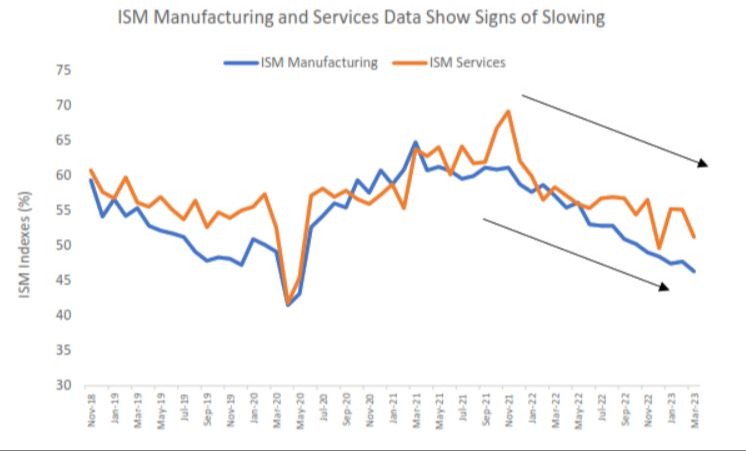
The ISM Services Data for March showed some interesting stuff. The ISM Services Index had slower growth than we thought, which means higher interest rates might be affecting the numbers.
As for the job market, it looks like it could be cooling of a bit. In March, employers added 236,000 jobs, which was the smallest increase since December 2020 and a bit less than the expected 238,000 jobs. Wage growth has slowed from 5.92% in March 2022 to 4.2% year-over-year in March 2023. So, for 24 months in a row, wages haven't kept up with inflation, which might make the Fed feel better.
The ISM Services Index, an important way to measure economic growth, was at 51.2% in March, one of the lowest levels since May 2020. While this sector is still growing, it's happening more slowly. The "prices paid" part of the index, which helps predict future inflation, dropped from 65.5% in February to 59.5% in March. This could mean inflation is slowing down in the sector.
Manufacturing data hasn't been too great either. The ISM Manufacturing index fell to 46.3% in March, the lowest since May 2020 and the weakest since mid-2009, except during the COVID-19 pandemic. This shows that higher interest rates are affecting economic activity.
In a nutshell, the financial markets are being influenced by factors like bond market changes, job market ups and downs, and inflation in the services sector. As we get more economic data, we'll better understand where monetary policy is headed and how it might impact the economy, the markets, and your money. Stay tuned.
The market indexes discussed are unmanaged and generally considered representative of their respective markets. Individuals cannot directly invest in unmanaged indexes. Past performance does not guarantee future results. The return and principal value of investments will fluctuate as market conditions change. When sold, investments may be worth more or less than their original cost.